Social Sonar — Spatial Audio Interface
Prototyping a “killer app” for Meta’s Smart Glasses — find your friends as easily as you find your AirTags.
Info
Focus
Links
01 — Problem
Finding friends can be hard!
Do you remember your last journey to meet a friend in a public space? You may have...
Kept looking between your phone & surroundings
Maps keep your eyes on a screen instead of the world in front of you.

Had trouble picking out your friend in a crowded area
A pin can get you close, but it can’t pick a face out of the crowd.

Faced communication problems
Vague or delayed texts, or calls with unclear or impractical details.
To address these issues, our team partnered with Meta Reality Labs to explore how Meta’s sunglasses could create more natural, screen-free meetups.
Meta was also looking for a “killer feature” to make their sunglasses a must-have item, so we challenged ourselves to create something useful to anyone who picked them up.
02 — Concept
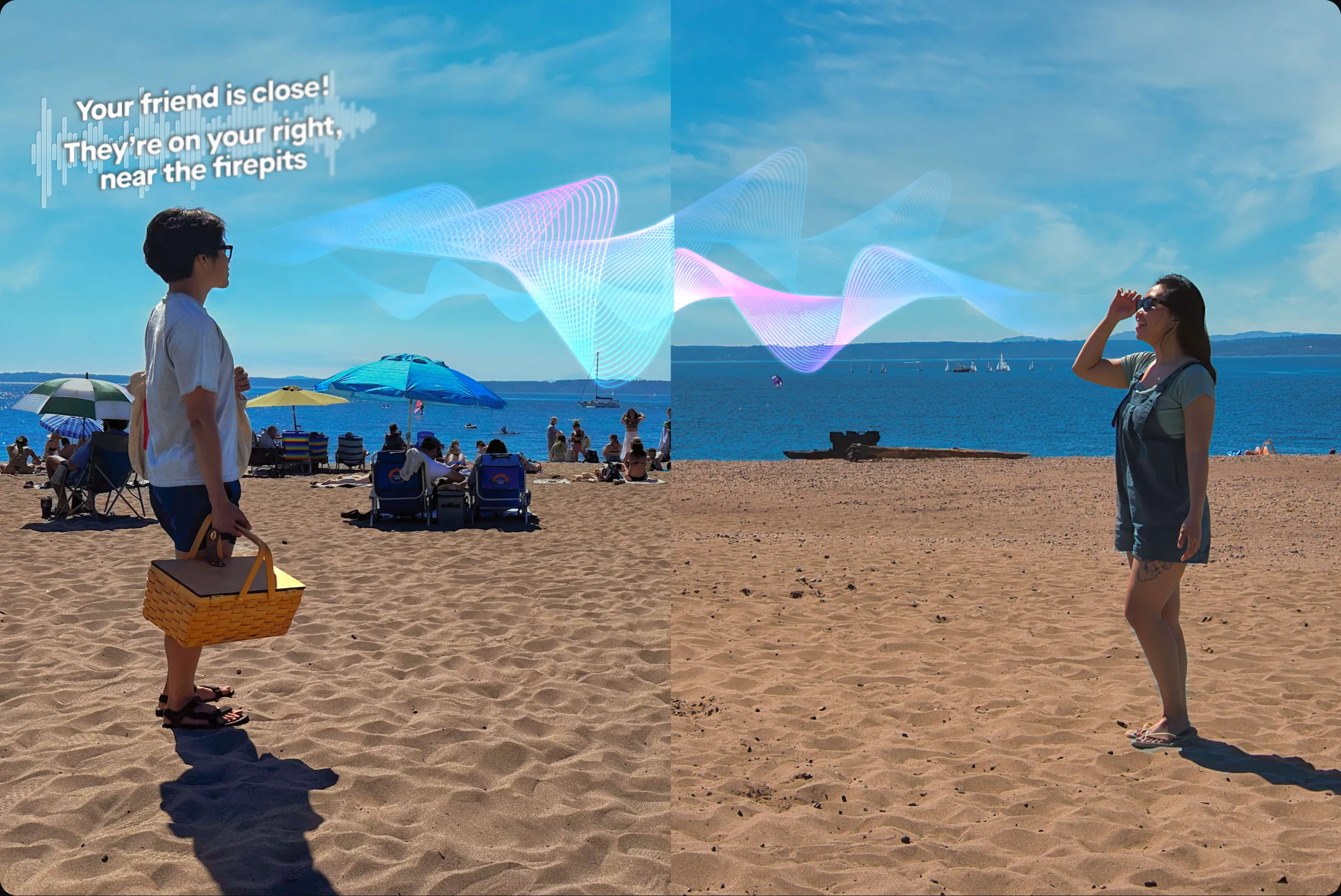
Navigation based on people, not destinations
When you’re a few minutes apart, Sonar takes over from the map. Sound beacons ping from your friend’s position and voice prompts chime in at key moments to confirm you’re on track. Walk through the full experience below.
A seamless fit into the Meta ecosystem
We imagined Sonar living inside the platforms friends already talk on — request a beacon straight from Instagram, Messenger, or WhatsApp.
03 — Making it real
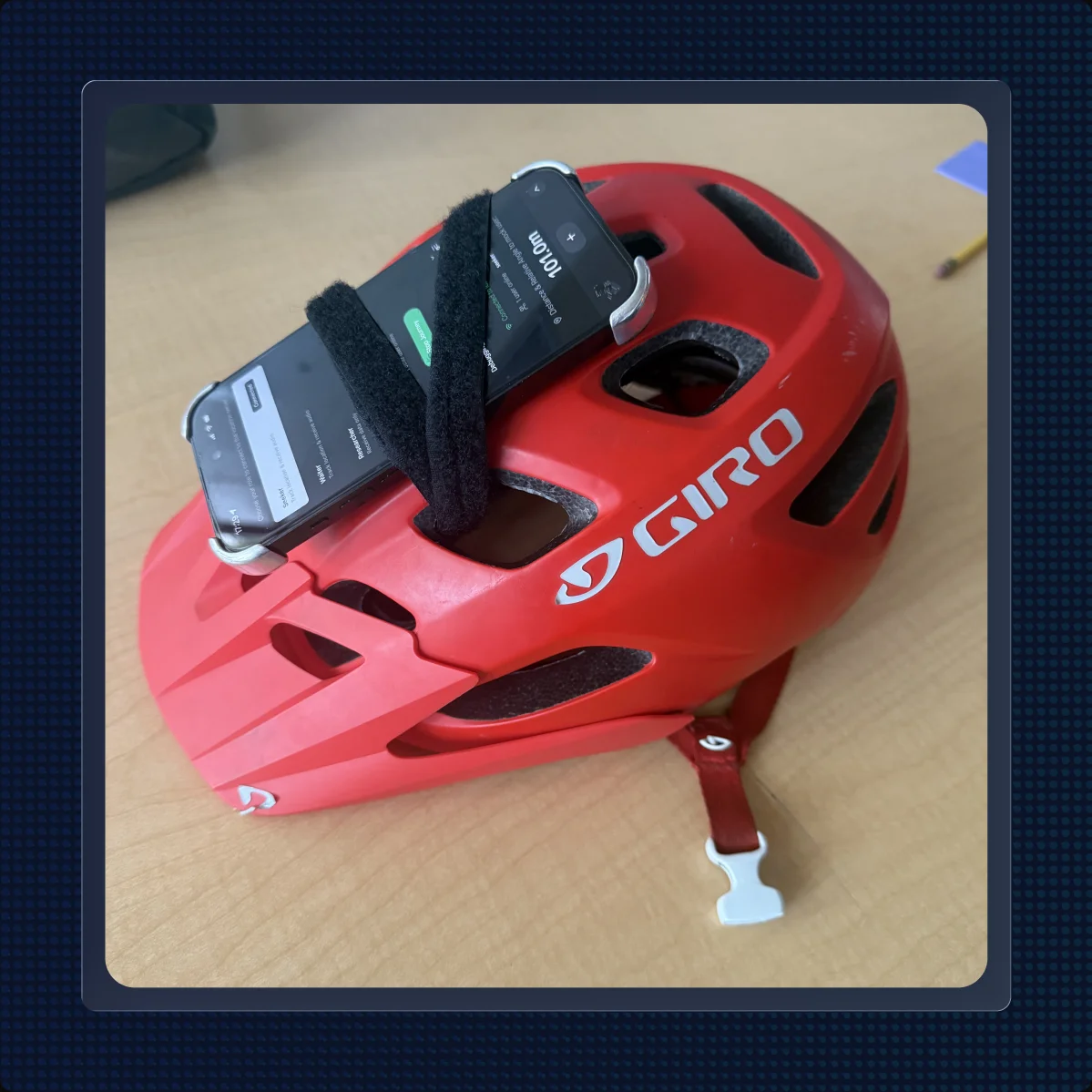
To find out whether sound could really make friend-finding natural or even fun we had to build it. This generation of glasses has no magnetometer to determine direction, so we strapped a phone to a bike helmet and I built a live location server, the spatial beacon, and voice guidance for all three phases.


04 — What we didn’t solve
The last ten meters
Standard GPS is generally accurate to within about 5 to 10 meters (16 to 33 feet). Once users enter that range, our system tells them “Your friend should be close, take a look around!” There may be a more elegant solution to uncover here.
Designing for nighttime
Every part of the experience quietly assumed you could see — the handoff from voice guidance to your own eyes, the idea that you’d enjoy taking in your surroundings, even the upbeat tone of the notifications. At night none of that held up, and testing became uncomfortable, sometimes scary.
Live location is a big ask
Sonar only works when two people share continuous location. We prototyped the trust; the consent experience remains unsolved.